
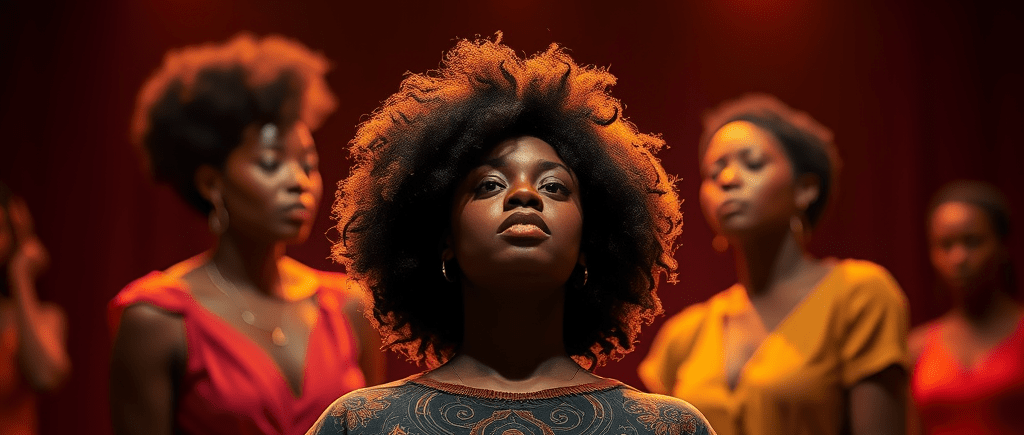
Choreopoems are a powerful storytelling medium. They combine dance, poetry and music.
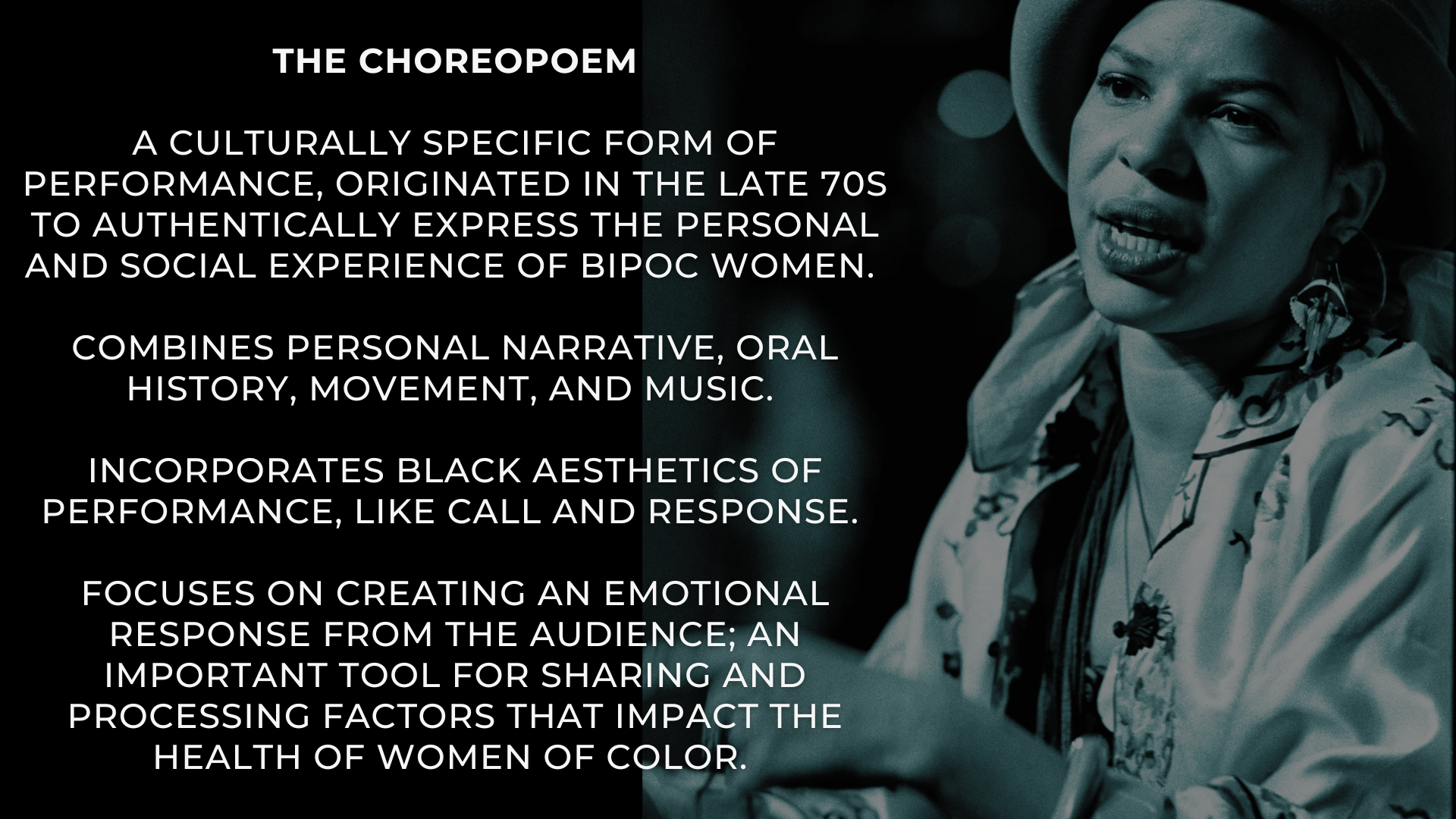
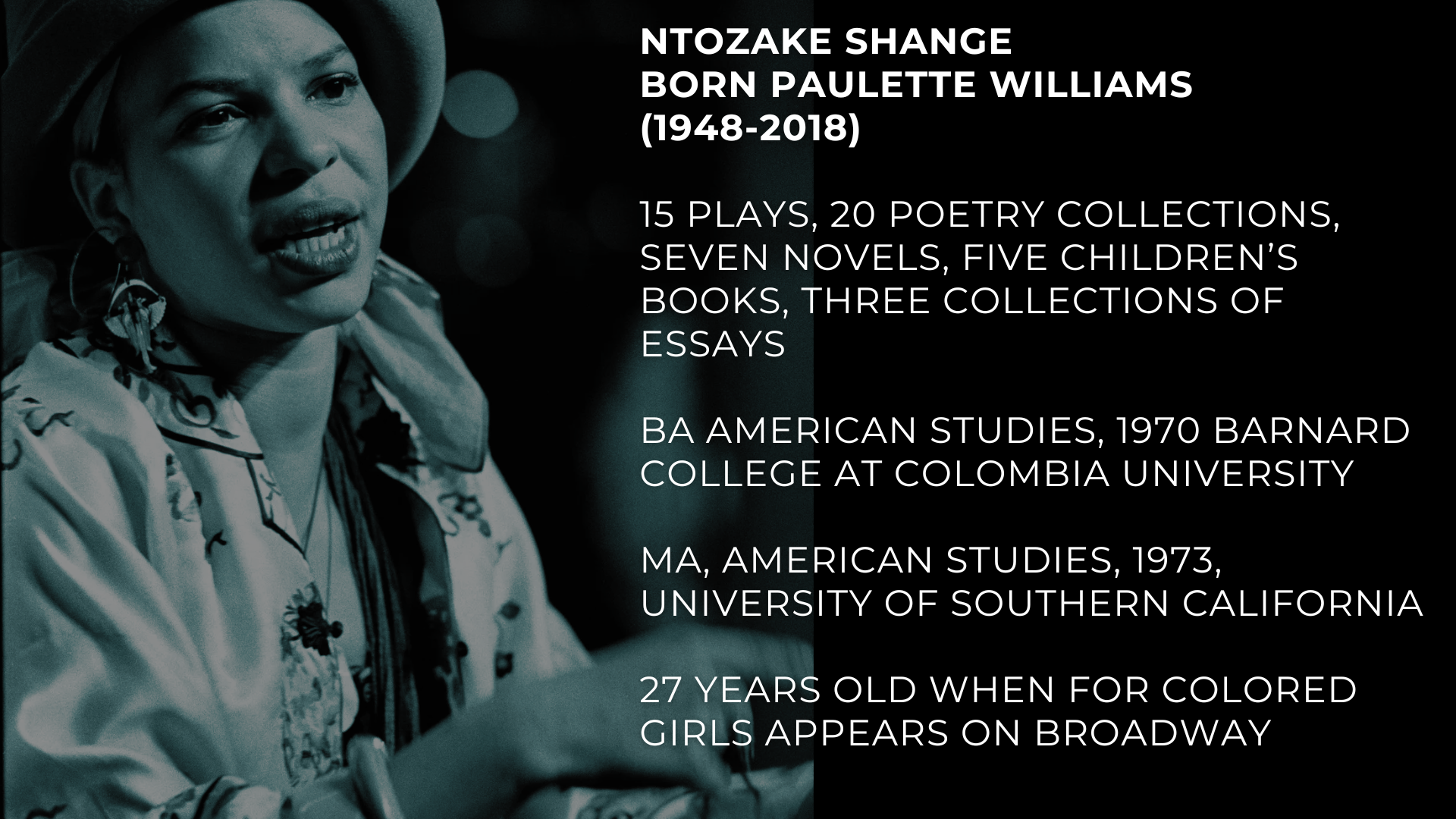
Playwright and Public Health Professional, Cynthia C. Harris, MPH, has lead the development of choreopoems for Healing Waters Productions. She has long been interested in the connections between Black women’s storytelling through choreopoems and public health. Anecdotally, Healing Waters Productions has reflected on the generation and dissemination of health information through theater since the beginning.
Choreopoems are the primary dramatic format used by Healing Waters Productions (HWP). In the HWP the Weaving Voices Method of Choreopoem Creation (WVMCC) process, transcripts and audio/video recordings, interviews are used to create performances.
Translating …We don’t want to offer the audience a definition or general description of a health issue. We aim to embody lived experiences, not an academic report or presentation that elicits an authentic, emotionally connected response from an audience.
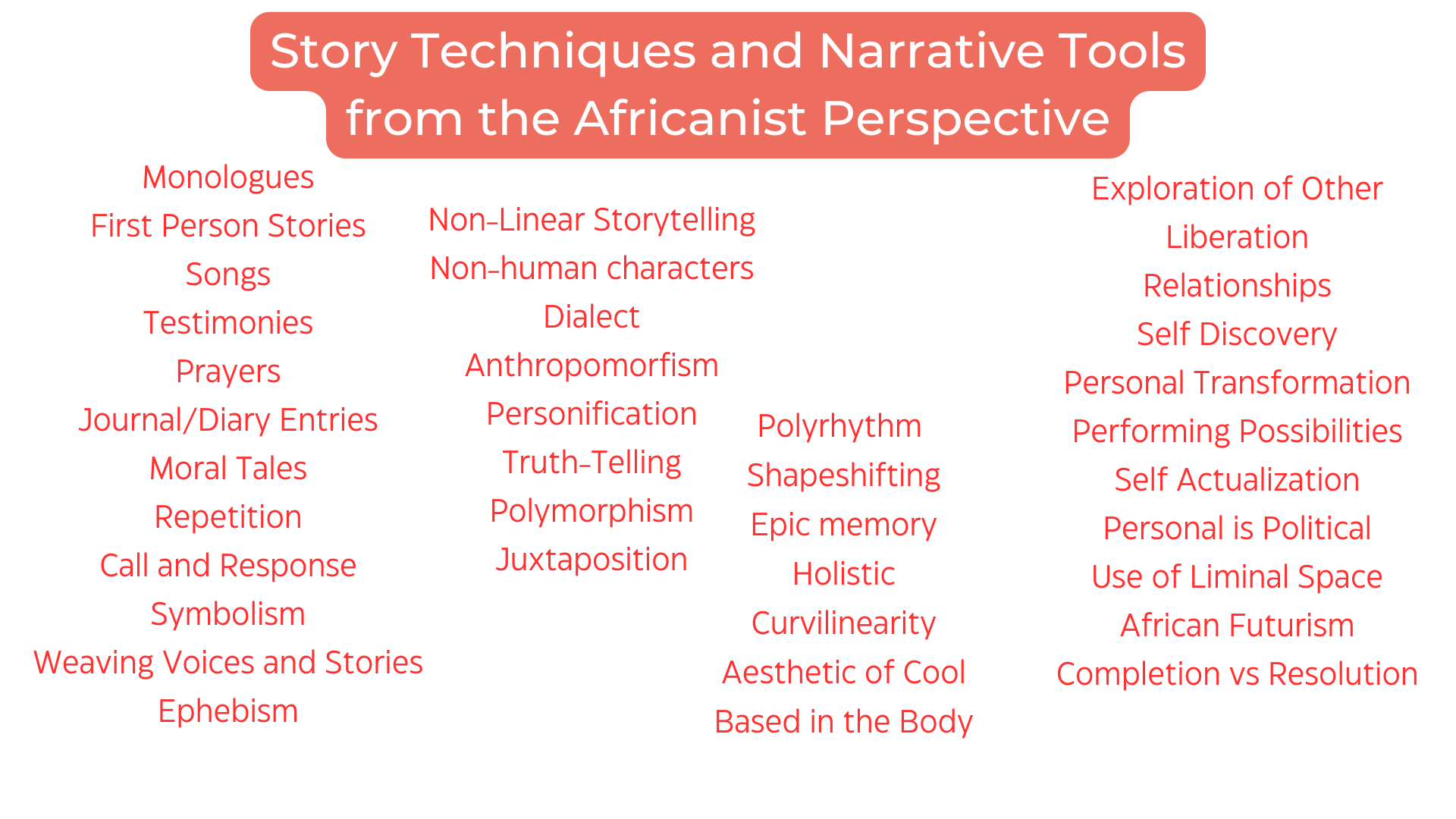
It is important to use the language and expression of the interview subject to capture and convey the storyteller’s “mother tongue” or “intimate language.”
In addition to using transcripts to inform the creation of the choreopoem, the HWP process scans popular media for dialogue among Black women about the health topic of interest. HWP reviews public health literature to ground the work in behavioral science and represents varied perspectives.
HWP creates a balance of lived experience, academic research and cultural artifacts like newspaper articles, magazine covers, and music to create our choreopoem.
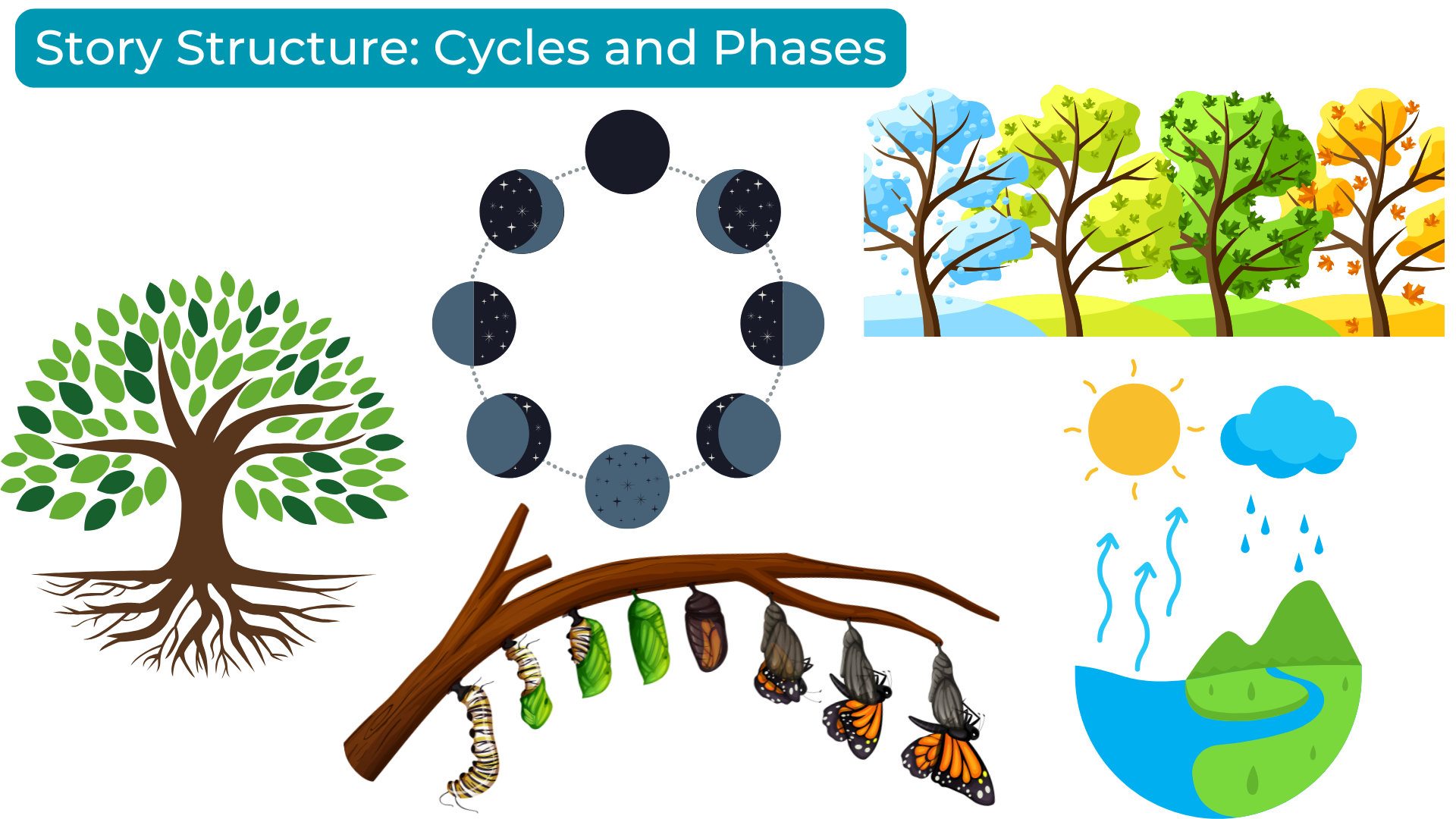
The playwright then seeks to create a dramatic structure with a beginning, middle, and end. The goal is to create a well-rounded and verbatim performance that concludes with “good news,” meaning that the final script’s closing leaves the audience with information that enhances their knowledge about the topic. The dramatic format is accessible to audiences who may not have access to peer-reviewed journals.

 Healing Waters Productions