Uncategorized

Is Your Family Safe for Women and Girls? pt V

Making families safe for women and girls is the necessary work of every human on this planet.

Safe homes allow women and girls to experience  rest and pleasure.

Safe homes allow women and girls to be exquisite caretakers of themselves.

Safe homes allow women and girls to be the center of their own lives.

Safe homes are spaces where women and girls can explore the thoughts, feelings and experiences that bring them deep satisfaction and pleasure.

Uncategorized

Is Your Family Safe for Women and Girls? pt IV

“when women respond appropriately to violating acts in public spaces, we are often treated as the source of disturbance, the offensive presence.  We are the ones told to calm down and are escorted to less populated spaces, as though our interruption of violence has caused the scene, rather than the provoking  incident.”

-Is Your Family Safe for Women and Girls? pt III

Responding appropriately to violence in family settings, to that very real  intimate terrorism, is no easy task.  It requires going against family norms and gendered behavioral codes we have consumed since birth.  We learn early when our emotional discharge is “too much” and that our silence is the best way to receive affirmation and praise.

I remember two recent instances very vividly during which women’s responses to violence seemed to cause more upset than the actual incident of violence.  At each occasion a woman was participating in a normal routine, either performing a duty at a public event or relaxing at a festive gathering.  At each occasion a male attendant at the event became angry when his attempt to alter the flow or predetermined activity in his favor, was met with no.  At each occasion the individual men became loud and aggressive, making threats or disparaging comments, both clearly inappropriate responses.  At each occasion, the woman’s no was not accepted or respected.  The first layer of the violation is in not accepting the NO.

The second layer of violation is in the responses of other male bystanders and witnesses-participants.  At each occasion one or more men attempted to bring the violent episode to a conclusion.  At each occasion minimal effort was put into addressing the offending males behavior by stating what  behavior on the offenders part would have been most appropriate or by stating that offending the woman verbally or sexually was behavior that would not be tolerated in that shared space.  At each occasion the male bystanders and witness-participants acted most quickly and thoroughly to silence the offended woman, verbally implying that her response, her anger or outrage was making the current situation difficult and uncomfortable.  At each occasion, the offended woman was told to “calm down” and if she did not immediately become silent she was labeled as “overreacting .”

I do not mean to over-simplify the experience of witnessing violence as a male or female.  Violence causes old and present terrors to lock our muscles and voices, freezing us in time.  It is very difficult to have any response other than shock and terror when violence is witnessed.  But when we are able to speak and act, we must speak and act appropriately.  Even if witnessing violence terrifies us, such that we are not able to intervene, we must never seek to silence the victim of violence  as a means of managing our own fear.

Events, Uncategorized

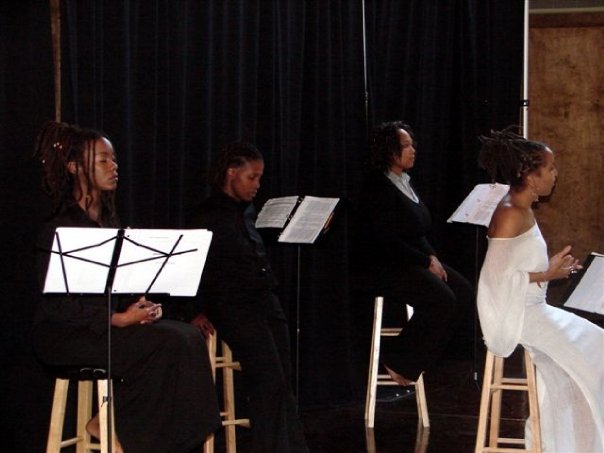
WWSL: National Black Arts Festival 2006


An excerpt from publicity materials:

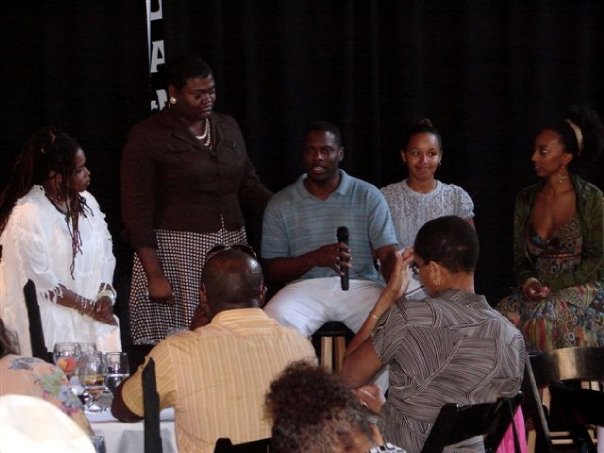
 We are currently gearing up for our presentation of “Why Won’t She Leave?” at 7 Stages Theatre in Atlanta, Georgia. The dramatic performance and post discussion will take place during the National Black Arts Festival, July 14th – 16th, 2006. “Why Won’t She Leave?” is an innovative fusion of monologue and dialogue that tells the riveting story of one woman’s experience in a turbulent relationship. The performance vividly details her initial search “outside herself for love” and finally for restoration. The work explores relationships between men and women and the tremendous power of our words to hurt and heal.

In addition to the performances, Healing Waters is hosting a creative workshop for teen girls on Saturday, July 15, 2006, focusing on dating violence. Your tax deductible donation will be used to help defray the costs associated with the production and sponsor a young woman’s participation in the workshop. 

Healing Waters Productions is fiscally sponsored by The Black Church and Domestic Violence Institute, a 501(c)(3) nonprofit organization. 


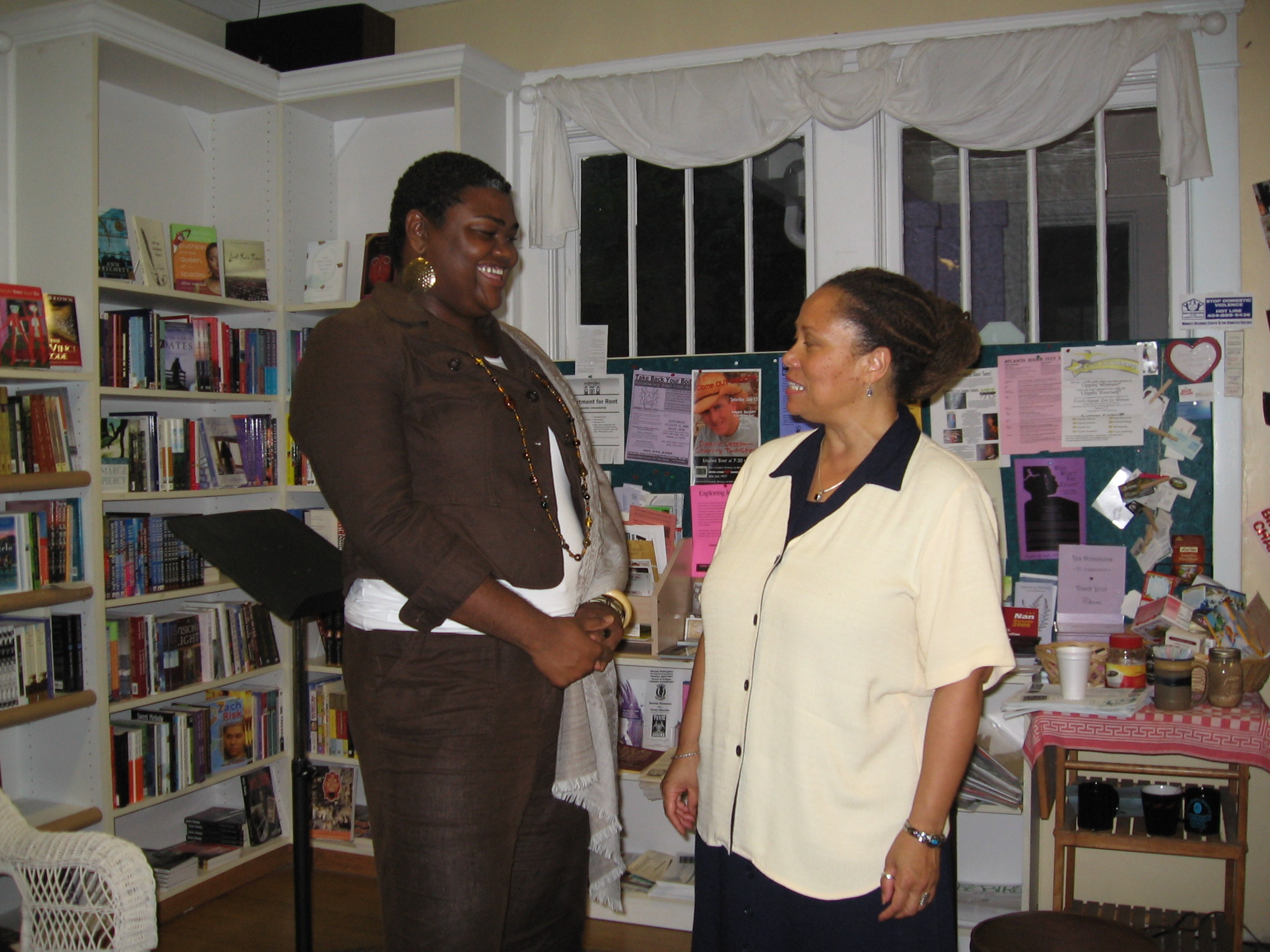
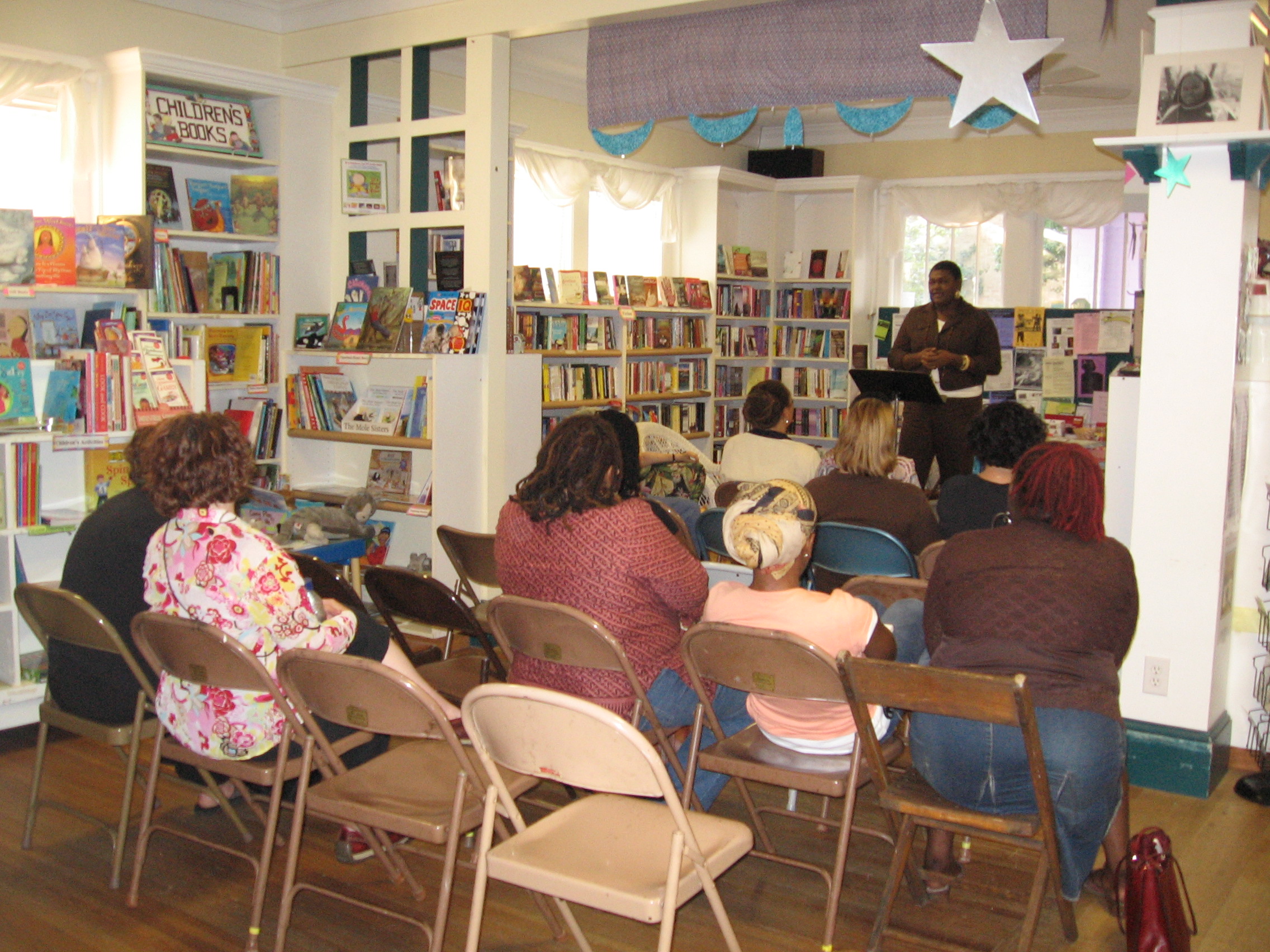
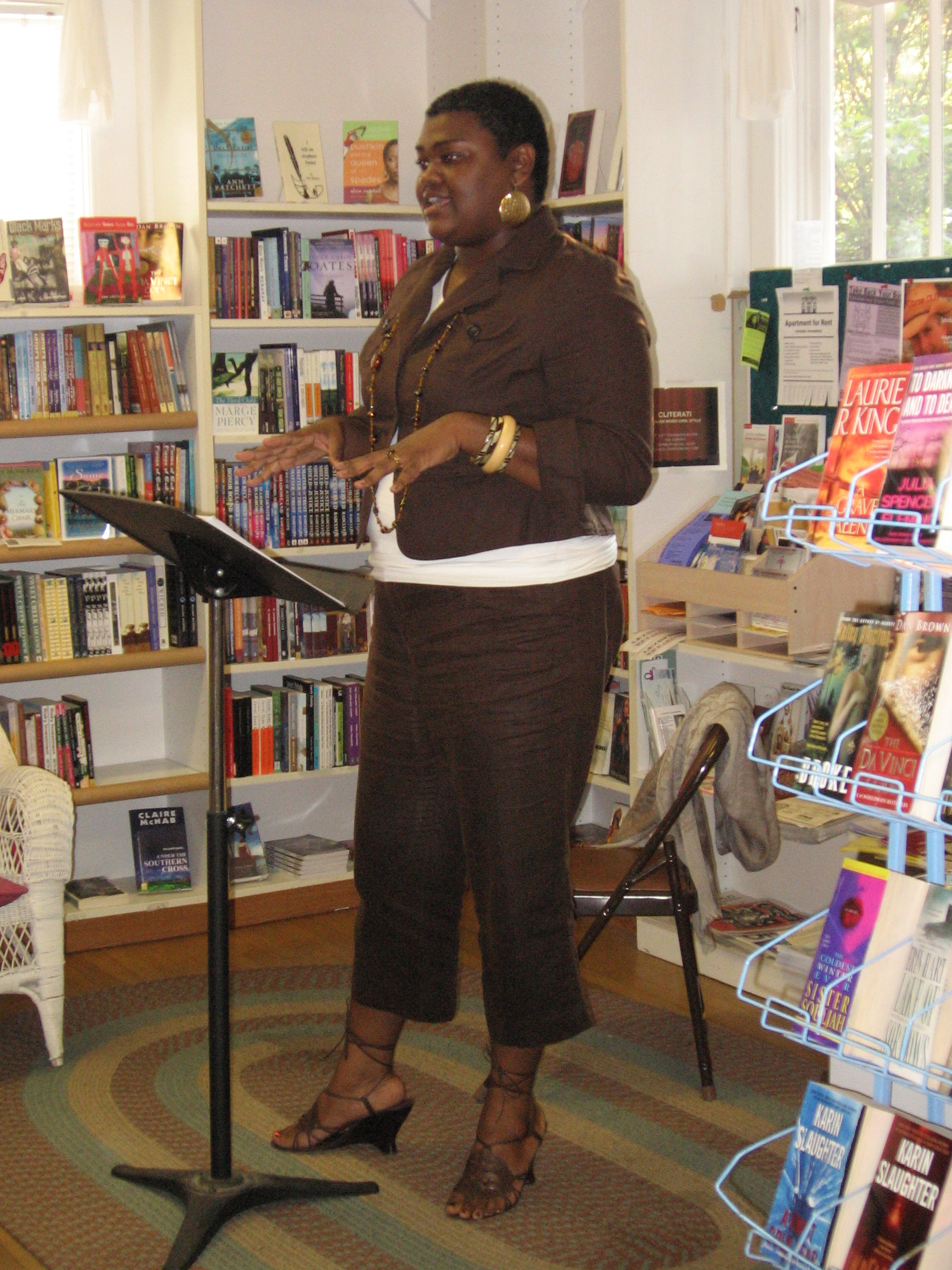
Wednesday, July 12th at 7pm – Artist Talk at Charis Books and More 
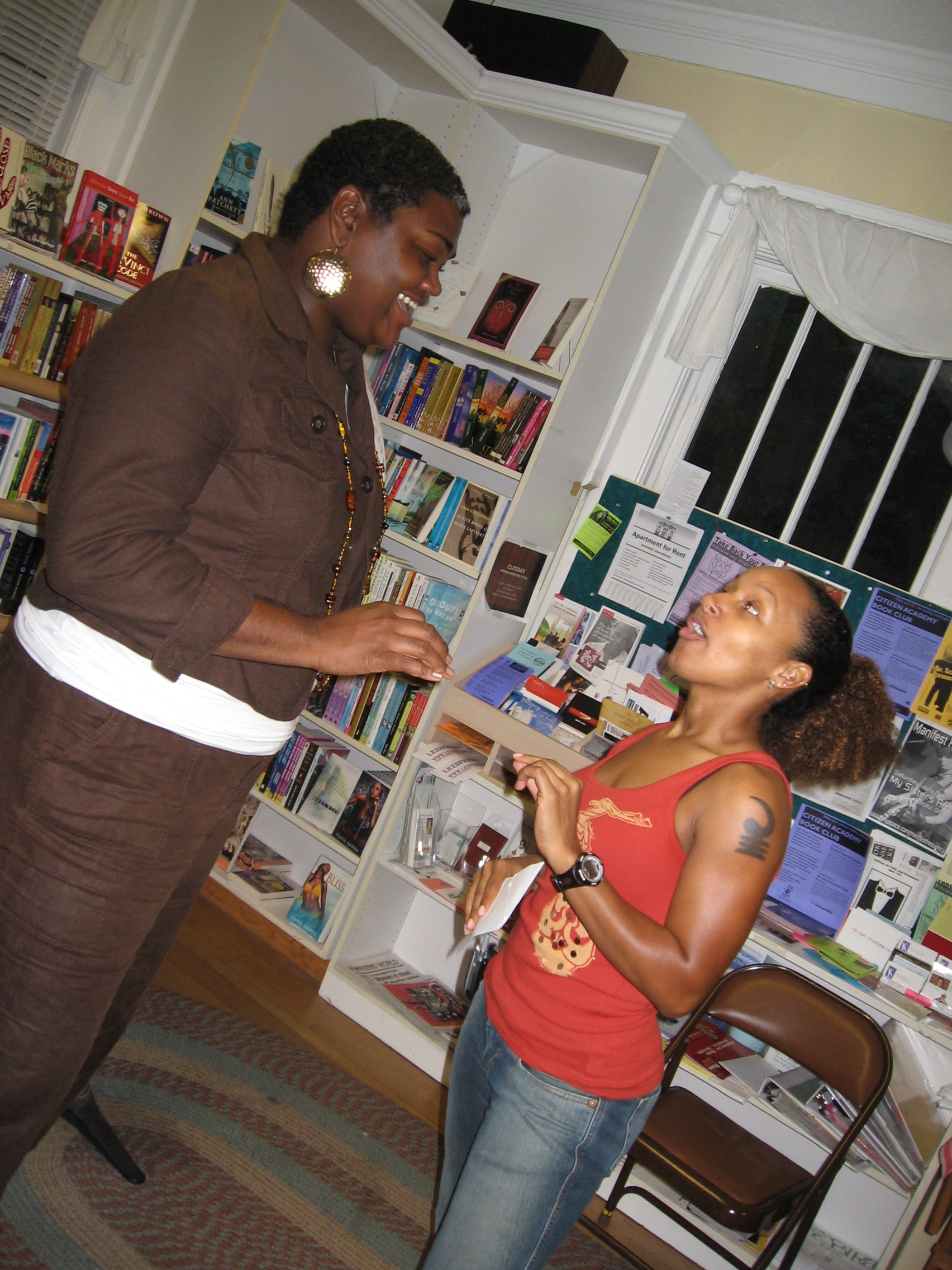
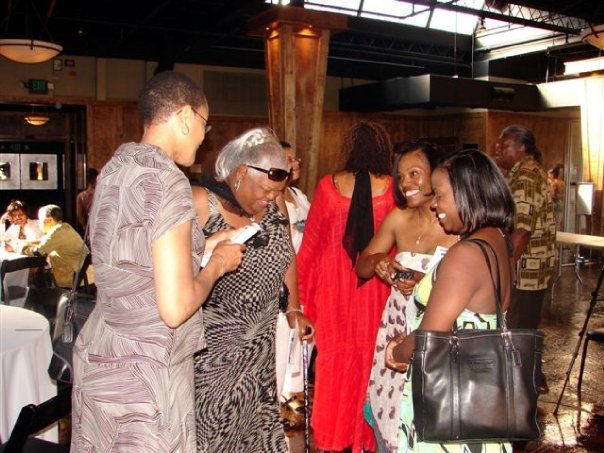
clockwise from top:
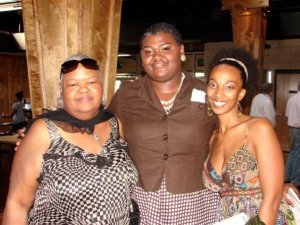
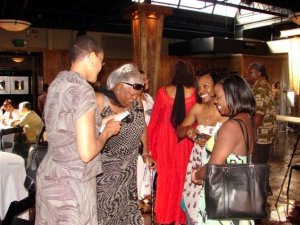
Cynthia and Rev. Aubra Love, Founding Executive Director of The Black Church and Domestic Violence Institute; Cynthia and Dia Hodnett; Charis audience


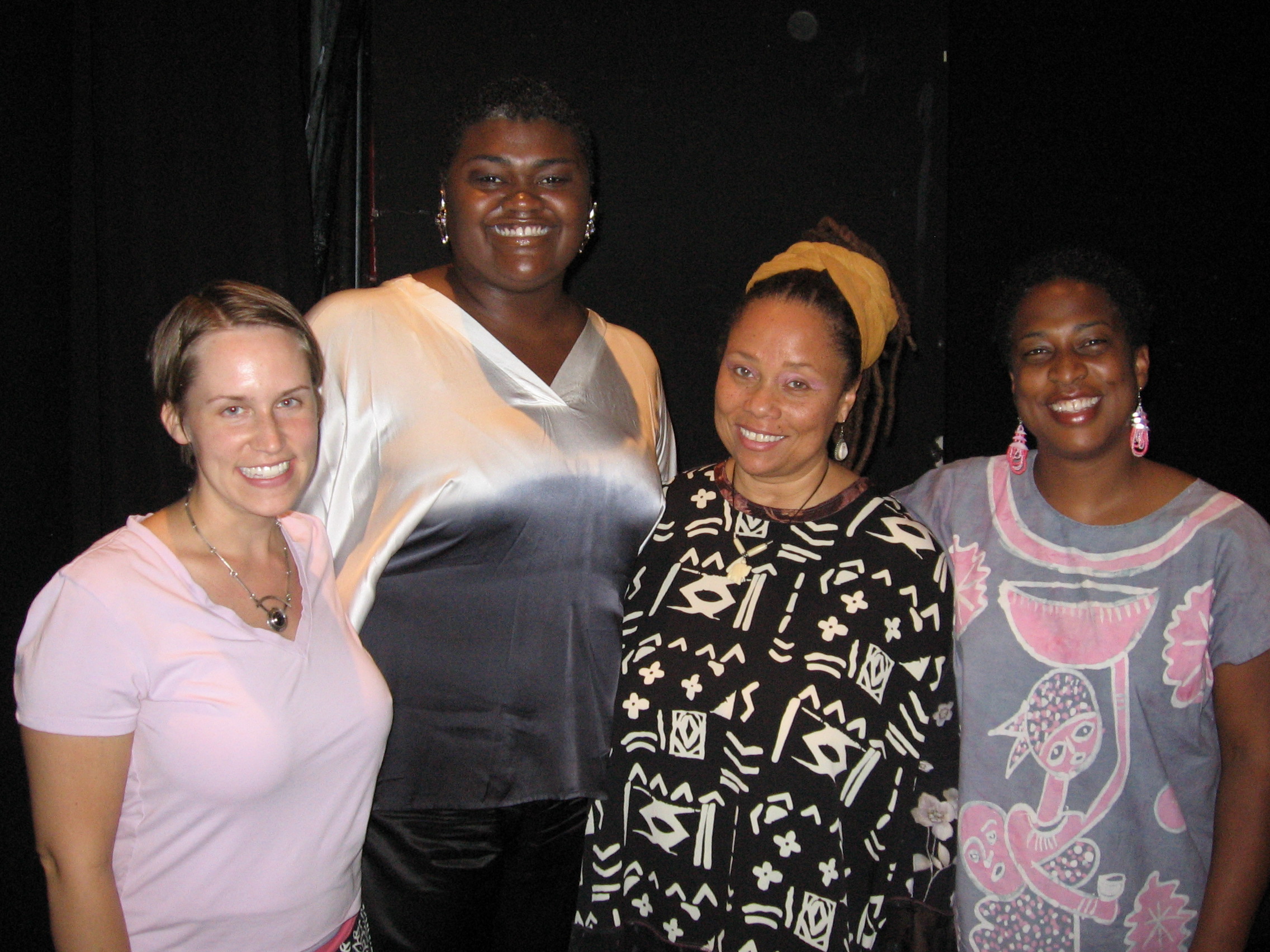
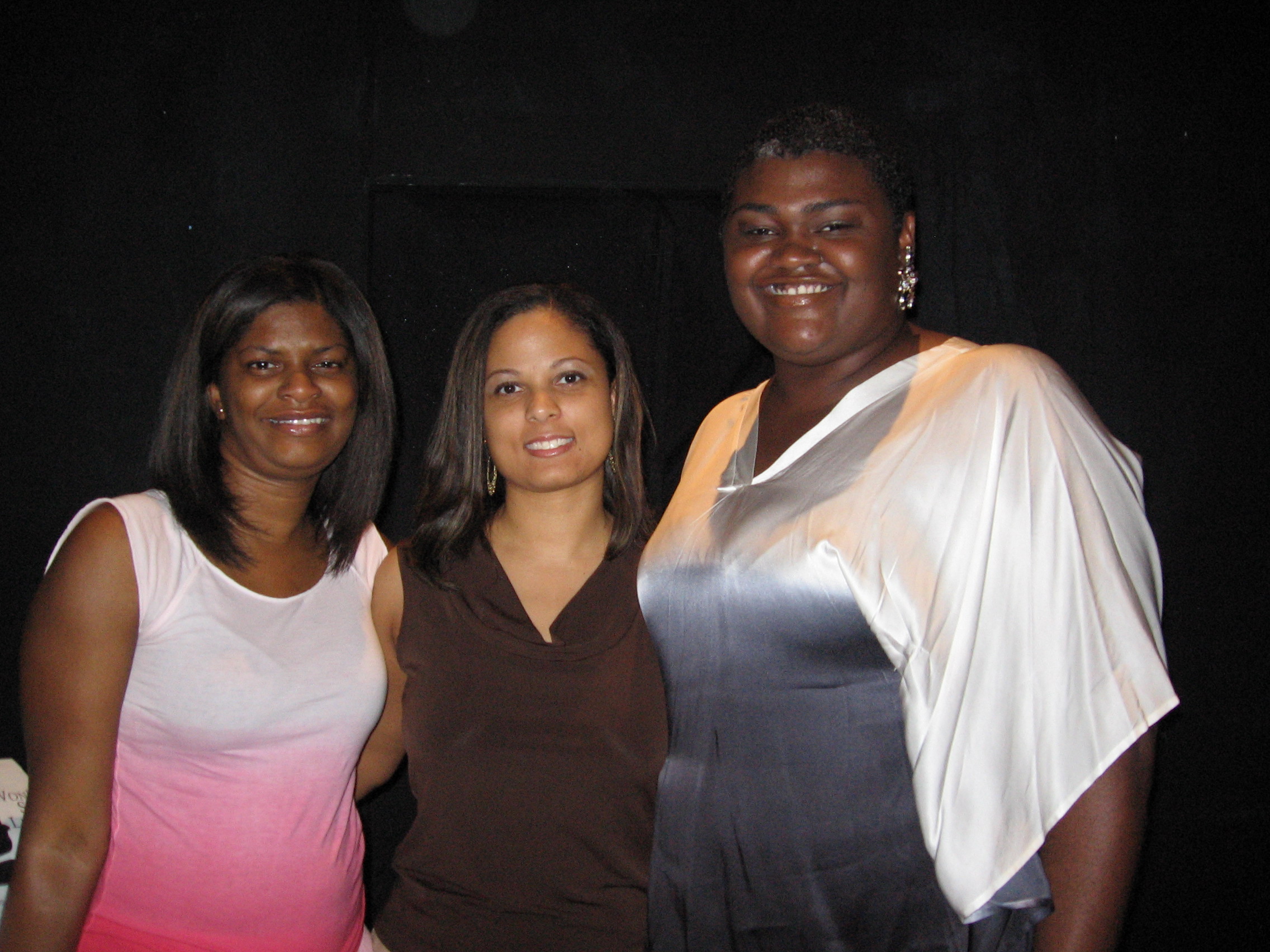
Friday, July 14, 2006 at 7 Stages Theatre in Atlanta, GA

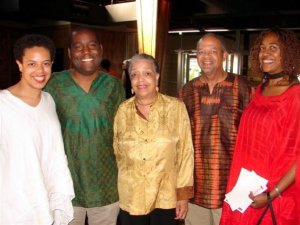
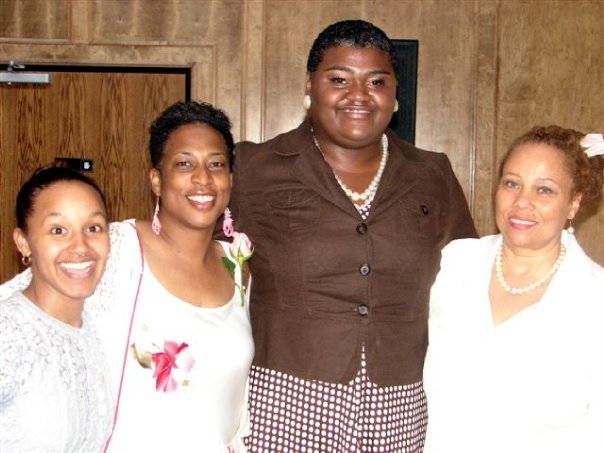
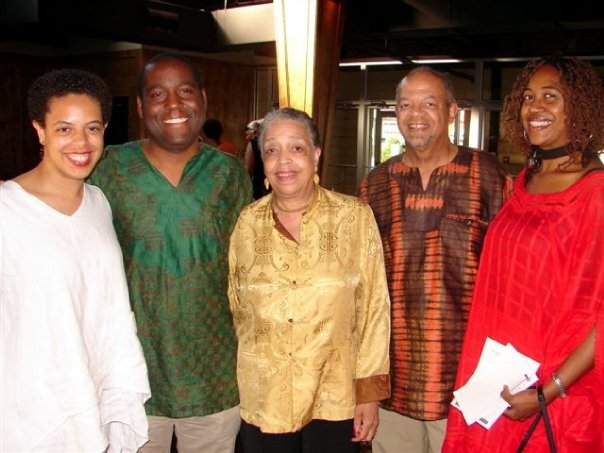
Members of the Black Church and Domestic Violence Institute leadership and Clergywomen’s Alliance l to r: Rev. Amanda Hendler Voss, Cynthia, Rev. Aubra Love, Founding Executive Director of BCDVI and Min Patsy White, Associate Director of BCDVI


Events, Uncategorized

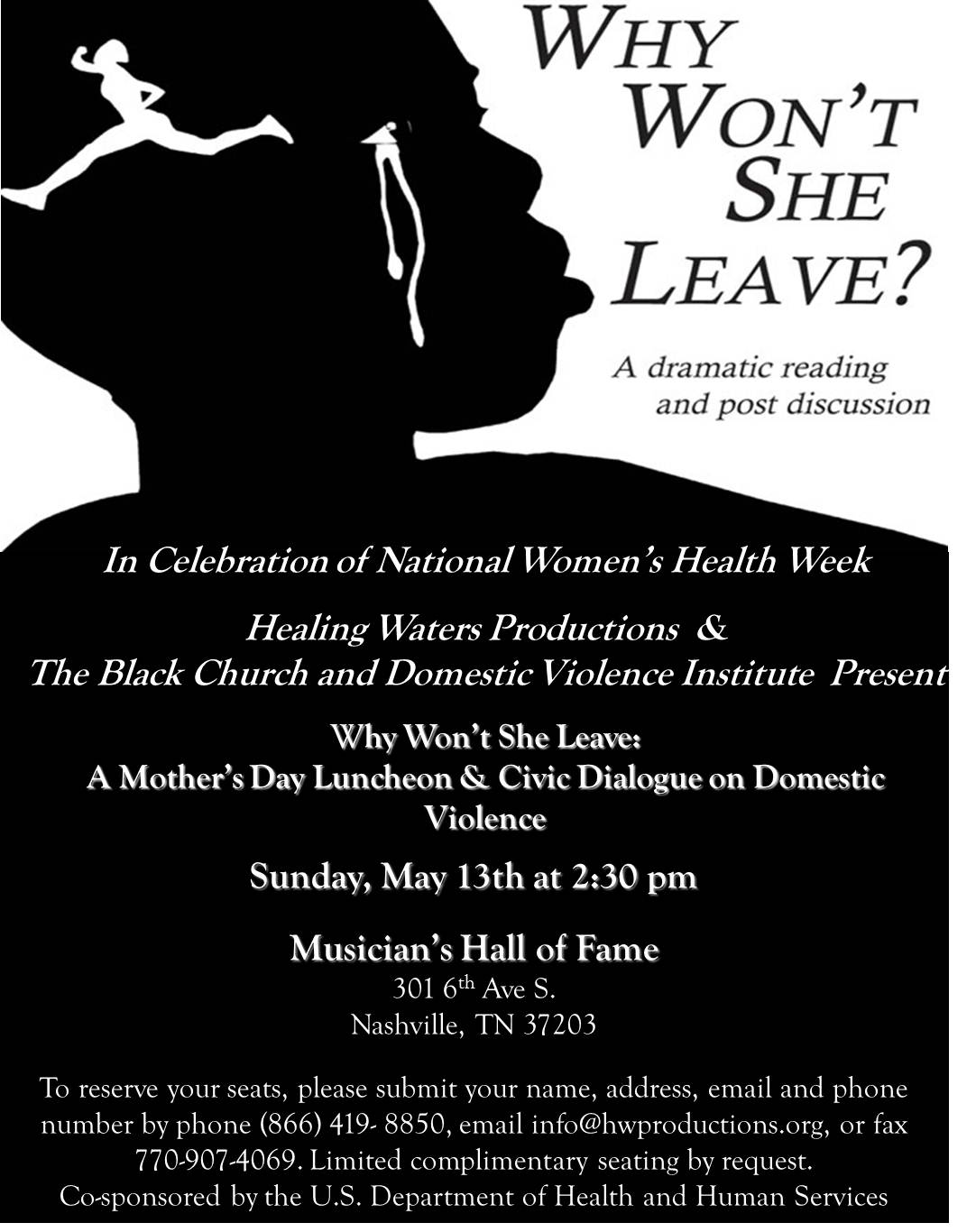
A Mother’s Day Lunch & Civic Dialogue on Domestic Violence

In Celebration of National Women’s Health Week

A Special Mother’s Day Luncheon and Dramatic Performance, “Why Won’t She Leave?”
May 13, 2007

Presented by Healing Waters Productions
and
The Black Church and Domestic Violence Institute

Co-Sponsored by the U.S. Department of Health Nd Human Services

Nashville, TN – Healing Waters Productions, an Atlanta-based educational theater collective, will present “Why Won’t She Leave?” an original work that explores the impact of domestic violence on victims and their families.  The May 13th performance will take place at 2:30 p.m. at the Musician’s Hall of Fame, located at 301 6th Avenue South.  This event is open to the public; and is recommended for mature audiences due to strong language and content.  Event organizers are particularly focused on introducing the work to local organizations that provide counseling and other services to women.
“I am a native Nashvillian, and I’m very proud to be here doing my life’s work.  In this symbolic homecoming, we are looking forward to partnering with local domestic violence and women’s health organizations and allies to build a network for training, education, and social change.”      – Cynthia C. Harris.

“Why Won’t She Leave?” (WWSL) has been presented to diverse audiences around the United States for more than two years.  The May 13 production is in collaboration with The Black Church and Domestic Violence Institute (BCDVI).

“We intend to engage communities, leaders, service providers and public servants with fresh conversations about domestic violence using the piece [WWSL] as an applied theatre educational tool.  BCDVI is an integral part of this process—through our partnership we are able to develop, organize and implement trainings that are sensitive and specific to the needs and goals of each audience.  One important lesson that we have learned through our organizational development is that successful collaborations are instrumental in creating appropriate and sustainable responses to violence against women.” – Cynthia C. Harris.
General admission tickets for this event are $20.  Student and Senior tickets are $15.  RSVP and advance ticket reservation are strongly encouraged.

About Healing Waters Productions

Healing Waters Productions is a collective of African heritage women sharing and theorizing about the very specific position of being socialized as women in the United States. As a production company offering arts-based education and training for social change, Healing Waters provides opportunities for women to notice, name, and voice their authentic experiences.  The mission of Healing Waters Productions is to merge public health theory and practice with the creative arts for the purpose of liberating the voices, bodies and spirits of all women.
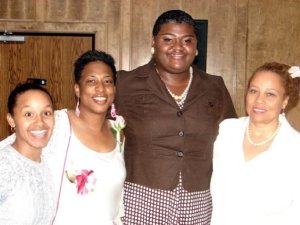
About Cynthia C. Harris, Founding Playwright & Visionary

Ms. Harris is a Writer/ Performance Artist/ Dancer/ Activist/Health Educator/ and proud southerner.  Her work in the field of women’s reproductive health research has fed an appreciation for the analytical and provided her with the opportunity to study human behavior. These experiences and her artistic talents that range from creative writing to international dance, have combined to create an informed, vocal advocate for women’s health issues. Her first performance piece, “Phrases of Womanhood”, has been performed since 2002 in Tennessee and Georgia by the Phoenix Ensemble. Her performance piece, “Why Won’t She Leave?” has been presented nationally since its debut in 2005.

About The Black Church and Domestic Violence Institute

The Black Church and Domestic Violence Institute (BCDVI) founded by the Rev. Aubra Love, trains faith-based leaders in the appropriate response to domestic violence. Incorporated in 1998, The Institute supports a network of clergy, lay leaders and agencies committed to ending domestic violence among women of faith within the continental United States and Caribbean. Headquarters of the National Clergywomen’s Alliance, BCDVI provides organizational development to women’s ministry efforts that promotes communities organizing and local responses to domestic violence.

Contact: Dia S. Hodnett, Director of Training and Special Events, Healing Waters Productions and National Board member of The Black Church and Domestic Violence Institute.   Email: diahodnett@gmail.com
Uncategorized

Alice Walker’s Sofia: Sisters Make all the Difference

I’ve had the opportunity to watch the movie “The Color Purple” many times over the last two decades, since its original release in 1985.  The visual interpretation of Alice Walker’s text, gave many of us an opportunity to see and publicly discuss the hidden realities of Black women’s lives.

I was thinking recently about the intimate partner violence experienced by the two characters Celie and Sofia.  In particular, I thought about the similarity of experience, in that both characters had histories of family violence.  The film shows us Celie’s sexual trauma, and Sofia tells Celie in a powerful scene that she has had to “fight” her father, uncles, cousins, and brothers her whole life.  Fighting here not only suggests physical violence, but might also include sexual violence as well.

It would be easy to assume that Sofia was able to leave or control the violence with her husband Harpo, while  Celie’s violence at the hands of Mister continues, because of a difference in the physical size of the two women or in their husbands difference in machismo.  The film shows Sofia as a woman larger in stature, who fights back, is very vocal and is not easily controlled, while Celie is smaller, timid and less vocal.  This surface comparison is tolerated due to our common mythical beliefs that there are certain “kinds of women” who are more likely to experience abuse.  These beliefs might make us think that if a woman is big enough or loud enough, she won’t experience abuse, but this is simply not true.

I think that one of the most vital differences, though individual experiences can’t ever be compared, is that Sofia had SISTERS.  Yes, Celie had her sister Nettie, but due to Mister’s isolation tactics, she was not able to access her sister’s social support.  Sofia never wondered about the power and breadth of her social support; she was very aware of it.  In her first meeting with Mister, she assures him that her pregnancy, nor economic reality are the reasons she is marrying Harpo.  She asserts that her sister made it very clear that she and her child are always welcome.  In the scene following Harpo’s physical abuse, Sofia’s sisters pack her belongings and her children into a wagon and take her away to safety.  Alice Walker eventually creates a source of intimate support for Celie in Shug Avery, which offers Celie the safe space and support to remember the truth about herself, and make the courageous exit from Mister.   Imagine how different things might have been for Celie if she had never been separated from Nettie.  Imagine Celie with consistent high quality social support.

I am reminded now that it is less useful to us to spend time trying to identify the characteristics of potential abusers and potential victims of abuse.  This checklist approach suggests that women who experience violence weren’t wise or vigilant enough to see the batterer coming  and protect themselves.  The truth is that all of us are capable of enacting and experiencing violence in our intimate spaces.  There are no identities that protect us.  It is far more beneficial to place our attention on reminding our sisters and sister-friends of the unconditional love and support we offer.  It is critical that the women and children in our lives hear from us, that we trust their brilliance and ability to make wise decisions about their safety.

Imagine the vibrant communities we can create if  we continuously fill each other with the truth about who we are and of the goodness we deserve.

Uncategorized

Is Your Family Safe for Women and Girls? PT. III

I realize that growing up in a family comprised majorly of women, does not equate to a safe environment for women and girls.  Families and circles of women can easily act out internalized oppressive beliefs on each other, even in the absence of a batterer.  We can “crack the whip” in our quiet spaces, acting out these deep mistruths about how Black women are lazy, and don’t deserve rest or unearned leisure.

In creating safe spaces for women and girls we might search for examples of women who created woman-centered spaces for themselves and other family members.  There might be, as Audre Lorde* mentions  “the unmarried aunt, childless or otherwise, whose home and resources were often a welcome haven for different members of the family…”  In whose home was/is it safe to speak freely, to rest, to dream, to express yourself creatively?  In whose home were you free to be present in your body, free from the feeling that you were being sized up up for having too much or too little, free to eat what you wanted without commentary, free of invasive notions of modesty?

If you can’t think of a person, try to remember who seemed the happiest, the juiciest, or was described as wild.  Since we aren’t always able to remember the truth about each other, these free women might have been looked at with suspicion or contempt.  You might have been warned against being that kind of woman, or the source of her joy may have always been connected to some sinful behavior.

We get to make the rules in our space.   We get to expect that those rules will be respected.  We  also get to make choices about how to proceed, when our wishes are not respected.

In the past, whenever I tolerated non-woman-centered conversations or allowed the creepy guest to explain why their action was misinterpreted, I have regretted it.  The tolerance came from the knowledge that when women respond appropriately to violating acts in public spaces, we are often treated as the source of disturbance, the offensive presence.  We are the ones told to calm down and are escorted to less populated spaces, as though our interruption of violence has caused the scene, rather than the provoking  incident.  Over time I became comfortable escorting offenders out of my home or gathering without feeling like I needed to justify my choice to the offender or the other guests.  And addressing the violence is absolutely necessary for everyone’s comfort.  Women don’t have to become hyper-vigilant as potential victims and men don’t have to be hyper-vigilant as potential defenders.

One of the statements I use to recover my voice when I feel threatened by the presence of violence is “I wish a (word for oppressive person) would say/would come up in my house and/would try to etc…”  Whether I say it out loud or to myself, I am reminded that I have choice and power in my space.  I can do something to make my family, my home, my life safer for women and girls.

*Scratching the Surface: Some Notes on Barriers to Women and Loving.  First Published in The Black Scholar, vol. 9, no. 7 (1978).

Creative Writing, Uncategorized

Is Your Family Safe for Women and Girls? PT. II

An excerpt from the performance Phrases of Womanhood (c) Cynthia C Harris and OlaOmi Akalatunde. 

Woman#2 :When I was younger, still in pigtails and patent leather Sunday shoes, they said I acted womanish and thought I was cute: all of em, Mamas, Aunties, Daddies, Uncles, and Play Cousins. I remember family outings and church picnics full of honey coated chocolate dipped caramel kissed grown folk, loud talking and story telling. Long rows of women fanning flies and fighting back beads of sweat. In between sips of iced tea, they attacked.

W#3:“Look at her, you gone have to watch that one right there. She ain’t but how old – and already thankin she cute.”

W#1:“Mmm Mmm honey, you ain’t gone be able to tell her nothing in a minute.”

W#3:”That’s the kind of girl that makes it hard to raise your son right. Lord knows we don’t need no mo fast tail girls round here layin up, makin babies left and right”

W#2:And there it was – the only possible destiny for a girl like me. I hadn’t even graduated from dress up shoes without buckles, couldn’t pick out my own clothes, couldn’t even do my own hair or fix my breakfast yet, but they already knew me.

I was guilty – of something. I walked with spine straight topped with a head held high. Ever peculiar about nice dresses and clean hands, I thought I was beautiful. No you couldn’t convince me that I wasn’t special cause I felt it with every part of myself.

I was the center of my very own universe. The stars shined for me. I could call thunder and rain. The crickets sang my song on cue. I was the first and only recipient of the keys to all the sweetness the world had to offer and I all I had to do was show up and be born.

But over time you begin to believe your inherent special-ness is wrong.

If youthful attempts to show pride bring shame then accepting that you are unworthy of positive attention or kindness is your only refuge.

New truth embraced, the scene was set for not telling my mother that every morning after I waved goodbye from the rear of the school bus, boys a few grades ahead of me called me dirty names and touched me under my uniform.

At school a classmate took an interest in me and decided I would be his girlfriend. Even though only an elementary student, he was well versed, in the ways a man treats a woman, especially one that thinks she’s cute.

W #1: (as though teaching or explaining a conspiracy plot)Rule #1-You sit next to her only at lunch and special assemblies, adorning yourself with her as a fancy decoration.

W #3: (as though teaching or explaining a conspiracy plot)Rule#2-You count her with your racecars and marbles, as a valued personal possession.

W #1: (as though teaching or explaining a conspiracy plot)Rule#3-You pull her braids and mess her ribbons for receiving any attention you don’t solicit or approve.

W #3: (as though teaching or explaining a conspiracy plot)Rule#4- You push her down into sharp gravel, for not feeling, looking, thinking the way you want.

W #2:  Slowly the weight of it all began to crush. Silence painted my pictures and shame laid my path. Cause this was my fault. I made this happen. It had to be my fault. Surely there had to be something about ME, the way words confidently flowed from my mouth, the way my heart was wide open to the sun and the world that made ME somehow appropriate for attack. Maybe I was born wrong or at the wrong time, Cause the world was telling me I was an Alien here. Wasn’t no place for me to just be as I was – naturally.

When everybody that is supposed to love you, speaks harshly, ridicules, abandons and picks at you till you are nothing but the words they call you and the thoughts they feed you, you wonder who you can turn to when your first, second, and third loves treat you like shit. Those same people that are supposed love you; all demand to know

W#1:Why do you, HOW could you tolerate such disrespectful partners and such and abusive relationships? If anybody ever talked to ME that way I’d…

W#2:They say

W#3:I guess I just expected more from you.

W#2:They say

W#1:We thought you knew better than to get yourself mixed up with somebody like that.

W#2:They easily forget that the self-love necessary to avoid such pitfalls is long gone. Slight traces found mixed with dirt under fingernails or sitting high in pantries, pickled in jars thick with dust.

Wouldn’t they all be happier if I could just fade away.

Wouldn’t the world be better if I were never here

Maybe somebody else coulda used this space or this brain or this blood or this body

And whatever piece of me still struggles and gasps for life could just relax and finally be

But somehow, always the pieces of you remain, somewhere in the between.

Somehow, no matter what the trauma, however intense, the missing pieces can always regenerate.

Somehow despite the worst of yesterdays and this mornings, right now and tomorrow SURVIVE waiting to be informed.

Deep under all the “other people’s stuff”. Under years and layers of something other than what you would have chosen for yourself, is the little girl waiting to uncurl her spine and love herself again.